Blogs
Making the most of Pension and ISA allowances
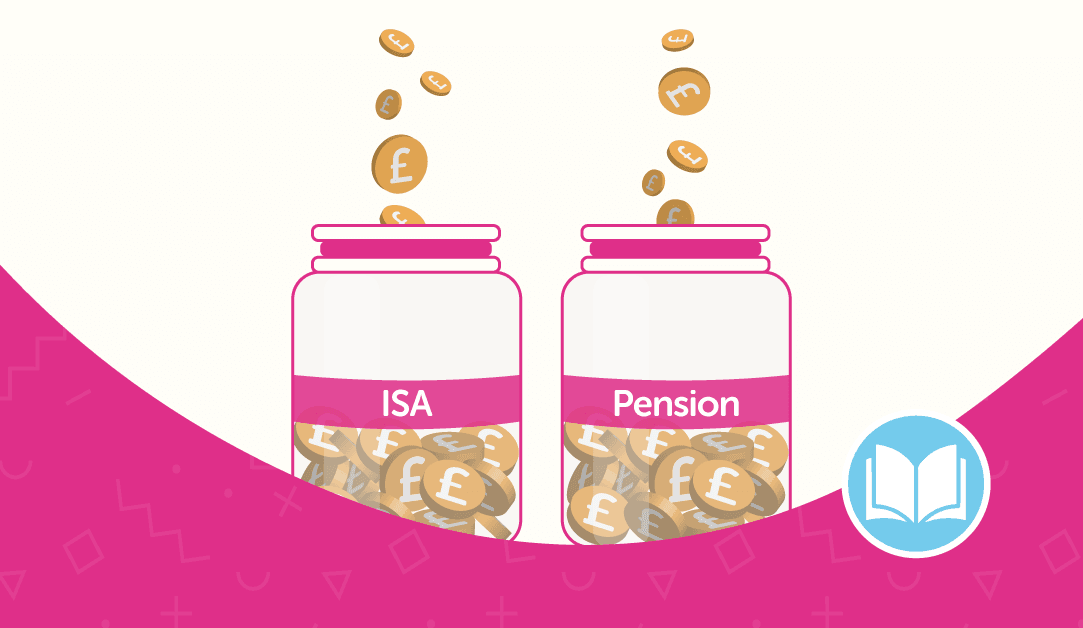
As we quickly approach the end of the tax year, are you making the most of Pension and ISA allowances?

Published on 31st January 2023
|
5 min read
As with most things tax-related, rates and allowances often change from tax year to tax year. The rates here relate to the tax year 2022/23, so it’s worth double-checking them if you’re reading this after April 2023. Also, the financial services industry simply loves acronyms! Here we will help you understand the difference between a LISA, JISA and ISA, and why tax allowances can help your savings grow!
ISAs
ISAs, or Individual Savings Accounts, are savings products that UK residents can open and save up to the allowance of £20,000 per tax year. The advantage of ISAs if that the holder does not pay tax on any interest, income, or capital gains.
ISA allowances cannot be carried forward to the next tax year so, if you don’t use them, you lose them.
The ISA comes in several guises:
Cash ISAs
You can open a Cash ISA from age 16. They work like a bank account where the money you pay in earns interest. Alternatively, you can have a stocks and shares ISA. This means your money is invested in shares in companies, unit trusts and investment funds, corporate bonds, and government bonds in the hope that the return you get on your money over the medium to long term at least keeps pace with inflation.
Please note that Cushon only offers a stocks and shares ISA but you can hold all or some of your money in cash.
Lifetime ISA
In addition, if you are over 18 years of age but under 40, there is the Lifetime ISA, or LISA, which is designed specifically for people saving to buy their first home. And the great news is the Government will add a 25% bonus to your savings to help you on the housing ladder more quickly.
You can save up to £4,000 a year into a LISA, which is deducted from your overall £20,000 ISA allowance.
A key thing to know about the £20,000 ISA tax-free allowance is that you only get it once. So, you could have £4,000 in a LISA, £10,000 in a Cash ISA and invest £6,000 in a Stocks and Shares ISA (combined total £20,000), and the interest, income and capital gains you make will all be received tax-free.
That is not the end of the ISA family. There is also the Junior ISA or JISA.
Junior ISA
A Junior ISA or JISA is an ISA that a child’s parent or guardian with parental responsibility can open on their behalf, but anyone can pay into it. The savings limit for a Junior ISA is £9,000 per tax year. Money in a Junior ISA belongs to the child and can’t be withdrawn until they reach age 18 at which point it automatically converts into an ISA.
Pensions
There are several tax allowances to be aware of for pensions. Firstly you receive tax relief at your highest marginal rate on any contributions you make to pensions. So, in essence, some of what you would have paid in tax goes towards your pension instead. This helps reduce the amount of tax you pay and helps boost your savings for the future. However, you are restricted to paying the lower of £40,000 or 100% of your earnings into your pension each year, to receive tax relief on the full amount saved. This is known as the Annual Allowance.
Paying pension contributions through your employer can bring other advantages too. Many employers offer the ability for you to pay contributions through salary exchange which means you exchange salary in return for pension contributions from your employer so you don’t pay National Insurance on that amount either. And with many workplace pensions, the more you contribute, the more your employer pays in. Win-win!
And, unlike ISAs, you can carry forward any unused allowances from the three previous years to boost your pension further. So for this tax year, once you’ve used up the full Annual Allowance you can use any unused Annual Allowance from 2019/20, 2020/21 and 2021/22.
However, the government does impose a Lifetime Allowance on pensions too. This means that if your pension pot grows to more than £1,073,100 over your lifetime (the current Lifetime Allowance), you could end up facing a tax charge on the benefits over this amount!
The other restriction to be aware of is that you start drawing income from your pension pot, which you can do from age 55 at the moment (rising to age 57 in 2028) you will only be able to pay up to £4,000 p.a. into your pension in future years. This is known as the Money Purchase Annual Allowance (MPAA).
The reason the tax-free allowances are important is that they help our savings and pensions to grow a lot quicker than if we were to simply put money in a bank account and can make a huge difference to our future finances.
You may also like...

Financial know-how
Three ways that pensions are a money multiplier
Saving into a pension can be so rewarding over time. We break down the reasons why your pension savings are a money multiplier.
Cushon Explainer
Blogs
OVO - innovation in workplace savings
With 9 out of 10 people under 35 admitting they will struggle to get on the housing ladder in the next decade, it seems natural that employers consider a workplace savings option beyond the pension scheme.
Cushon
Research
Social Market Foundation research pot-for-life
There is a structural challenge at the heart of defined contribution (DC) workplace pensions. The buyer of pensions (the employer) and the end consumer (the employee) are not the same.
Cushon

News
Double victory for Cushon
Cushon proudly took home the awards for Best Financial Wellbeing Provider at the Corporate Adviser awards and Best Investment Strategy at the European pensions awards last week.
Cushon